
Key Material Considerations for Silicone Medical Parts
Selecting the Right Grade of Silicone
When designing هل زجاجات المياه القابلة للطي آمنة للاستخدام اليومي؟ - كازيندا, picking the proper silicone grade is basic. Medical-grade silicones need to meet tough biocompatibility rules like USP Class VI or ISO 10993. These rules make sure the material won’t cause harmful, irritating, or allergic reactions during long contact with body tissue or fluids.
Two main kinds of silicone materials are often used to make medical parts. They include Liquid Silicone Rubber (LSR) and High Consistency Rubber (HCR). Each type has unique features that fit certain uses. LSR is a two-part platinum-cured elastomer. It has excellent flow properties. So, it works well for high-precision items and tiny parts. HCR is usually shaped by compression or transfer molding. People value it for its solid strength and toughness. This makes it good for bigger or simpler parts.
Rubber (Silica gel; Rubber) is a very active adsorption material. It stays in an amorphous state. Its chemical formula is mSiO2 · nH2O. It doesn’t dissolve in water or any solvent. It’s non-toxic and scent-free. The chemical traits are steady. It won’t react with anything except strong bases and hydrofluoric acid.
Impact of Durometer on Sealing Performance
The durometer, or hardness level, of silicone material greatly influences its sealing ability. Softer levels, like 20–40 Shore A, give better flexibility to uneven or sensitive surfaces. They create tight seals even with light pressure. This matters a lot for interfaces in diagnostic tools and microfluidic setups.
On the other hand, firmer levels from 60–80 Shore A offer better shape stability under heavy loads and high heat. They suit reusable surgical tools and implantable cases. There, accuracy and lasting dependability are key.
The tensile strength can reach 500 PSI. The resistance can hit 88 LBS. These traits are strong. Plus, it handles compression deformation well.
Molding Techniques That Enhance Seal Integrity
Benefits of Liquid Silicone Rubber (LSR) Injection Molding
LSR injection molding is a top choice for making silicone medical parts. It provides great accuracy and consistency. This method fits well for tiny seals and detailed shapes in point-of-care diagnostic devices.
It offers high efficiency. The liquid silicone machine can produce items fast. It’s automated. So, it boosts output. It ensures high precision too. The machine uses exact injection and curing steps. This keeps product sizes accurate and quality steady. Plus, it’s versatile. The machine’s mold can be tailored. So, it makes products in various shapes and sizes. This meets different customer needs.
Also, LSR molding works in cleanrooms. This supports sterile settings vital for medical device production.
Overmolding Strategies with Thermoplastics or Metals
Overmolding silicone onto thermoplastics or metals improves the connection between soft seals and hard bases. This mixed method cuts down on part numbers. It skips extra bonding steps. Those steps are often unreliable and time-consuming.
Silicone coated products form a single unit. They add a silicone layer to metals, plastics, or other materials. By using silicone’s own features, they gain perks like smooth touch, resistance to aging, easy release, and grip prevention.
This approach also eases final assembly. It can boost overall product toughness in tough uses. Examples include surgical tools or wearable health trackers.
Two-Shot Molding for Integrated Seal Designs
Two-shot molding lets designers build multi-material parts. In these, silicone seals join directly with stiff structural elements. This method ensures firm bonds between materials. It also avoids lineup mistakes that might weaken seals.
It’s very helpful in tricky setups like implantable devices or units with many fluid channels. The final parts are sturdy, small, and less likely to leak during operation.
To meet diverse application requirements, many manufacturers now offer ODM/OEM custom processing services for silicone medical parts, covering material selection, mold design, prototyping, and mass production. These customized solutions allow medical device brands to achieve precise sealing performance while accelerating product development cycles.
At international exhibitions such as the Canton Fair, experienced suppliers showcase their capabilities in LSR molding, overmolding, and integrated seal design, helping global buyers identify reliable partners for customized silicone medical components.
Testing Protocols to Validate Sealing Performance
Leak Testing Methods for Silicone Seals
To confirm reliability in real use, various leak tests are used. They depend on the silicone medical part’s purpose. Common ways include pressure decay tests, vacuum decay tests, and helium mass spectrometry.
Pressure decay testing works by filling the sealed unit with air pressure. Then, it watches for pressure drops over time. Helium leak detection gives very sensitive results. It’s perfect for implantable devices needing total sealing.
Dimensional Inspection Standards
Silicone is a flexible material. It can bend easily during checks. So, non-contact tools are crucial. Optical metrology systems provide exact size checks without changing the part’s shape.
Using optical metrology and non-contact tools for soft items like silicone ensures seals hit strict size limits. This is needed for top sealing in small or complex setups.
We have earned many industry awards and certifications. They show our strong focus on quality. We use pro testing gear like digital calipers, electronic scales, Shore durometers, and life testers.
Common Applications Requiring High Precision Silicone Seals
Diagnostic Equipment Interfaces
In diagnostic systems like ultrasound Doppler fetal heart monitors or modular blood analyzers, silicone gaskets make airtight links between cartridges or sensor housings. M521 Ultrasound Doppler Fetal Heart Rate Monitor can realize early monitoring and close attention to the fetal heart rate. Reliable sealing is key for steady data collection.
Soft silicone with low hardness ratings keeps these links sealed. It holds up through repeated use or connections.
Microfluidic Systems in Point-of-Care Devices
Tiny seals are essential in microfluidic platforms for handling fluid paths. These systems need very precise flow control. This ensures proper sample processing and reagent blending.
Fetal Heart + Fetal Movement Smart Belly Band…Expanded Detection Area…Intelligent resumable testing…Link to the mobile app shows how integrated electronics and microfluidics depend more on precision-molded silicone seals.
Implantable Device Enclosures
For long-term implants like pacemakers or drug infusion pumps, silicone seals must guard against body fluids nonstop. They also need full biocompatibility. This use calls for careful material picks, often USP Class VI. Precise molding techniques achieve no-leak results over long periods.
Reusable Surgical Instruments
Tools that face repeated autoclaving need seals that keep bounce and structure despite high heat and steam. Silicone’s natural heat resistance makes it perfect here.
Silicone buttons have excellent heat resistance, cold resistance, environmental resistance and fatigue resistance. This confirms its toughness under sterilization without losing sealing power.
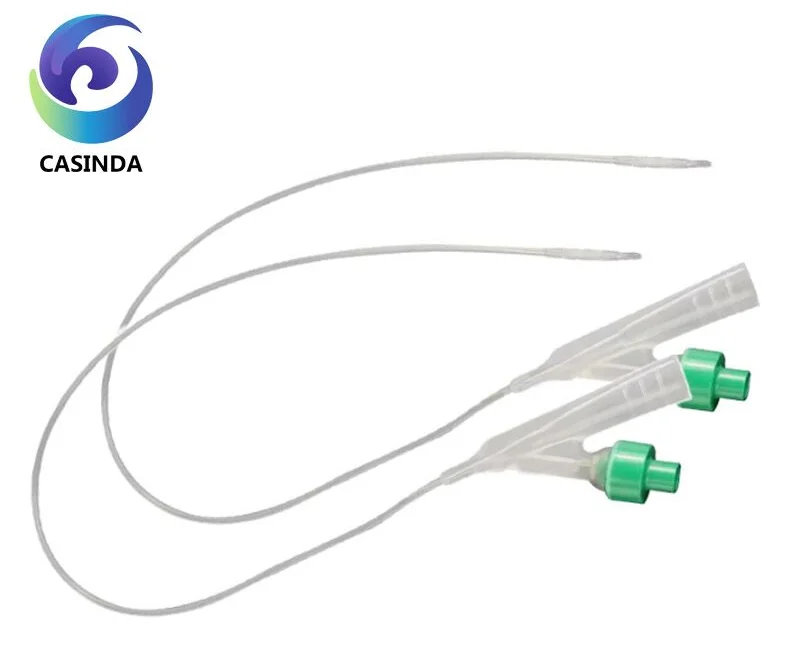
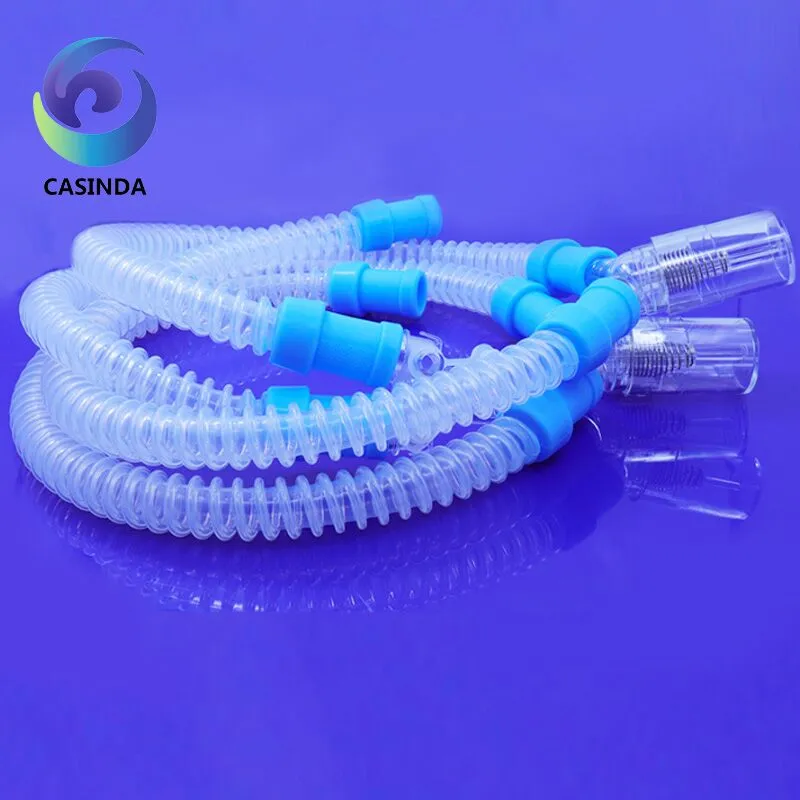
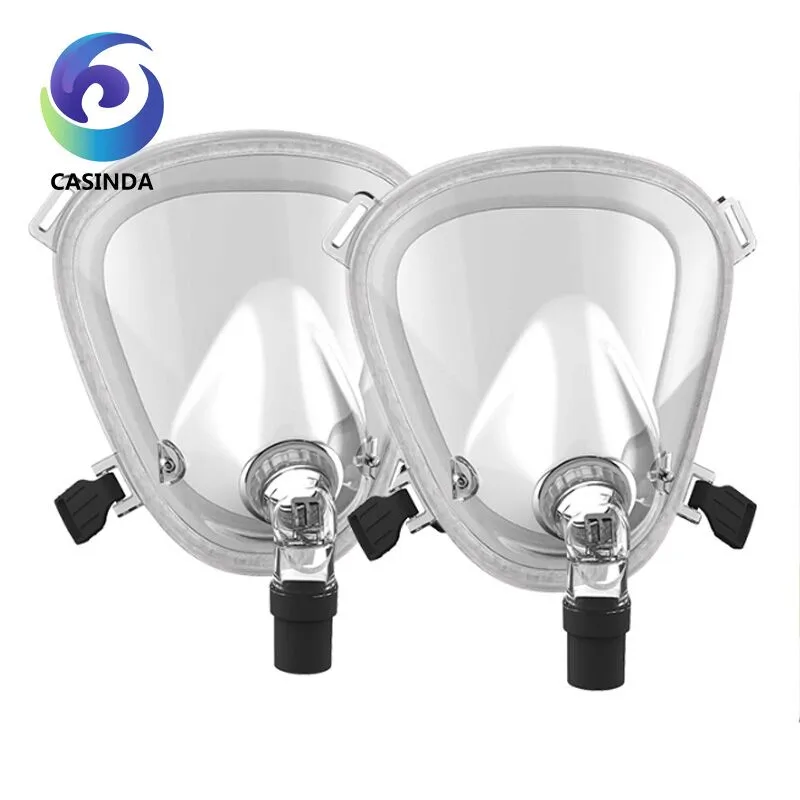
The blend of solid molding methods with proven material traits makes medical-grade silicone parts perform reliably in many healthcare uses. At the Canton Fair, manufacturers like CASINDA showcase their expertise. They provide high-quality, safe products through liquid molding, expert mold design, and quick prototyping for silicone medical parts. From كاسيندا, offerings include ODM/OEM services with custom processing for items like disposable two-dual lumen catheter, silicone bellows respirator circuit tubing, and medical ventilator respirator full face mask accessories. This focus ensures tailored solutions for precision sealing needs.
التعليمات
Q: Why are silicone medical parts widely used in precision sealing applications?
A: Silicone medical parts are widely used because of their excellent biocompatibility, flexibility, and resistance to heat, chemicals, and aging. These properties allow silicone seals to maintain stable performance in demanding medical environments such as implantable devices, diagnostic equipment, and reusable surgical instruments.
Q: How does material selection affect the sealing performance of silicone medical parts?
A: The performance of silicone medical parts depends heavily on selecting the right silicone grade and durometer. Softer silicone improves conformity and sealing on delicate surfaces, while harder grades provide structural stability under pressure, ensuring long-term sealing reliability in medical devices.
Q: What manufacturing methods ensure high precision for silicone medical parts?
A: Advanced processes such as Liquid Silicone Rubber (LSR) injection molding, overmolding, and two-shot molding help achieve tight tolerances and consistent quality in silicone medical parts, making them suitable for microfluidic systems, implantable enclosures, and complex medical assemblies.

 Arabic
  English
  French
  German
  Italian
  Japanese
  Korean
  Portuguese
  Russian
  Spanish
  Vietnamese