
What Are the Differences Between Body‑Safe and Medical‑Grade Silicone?
The Definition of Body‑Safe Silicone
Body‑safe silicone means silicone materials that lack toxins, resist allergies, and avoid dangerous chemicals like BPA or phthalates. These silicones aim to stay safe when touching human skin. Yet, they might not suit internal or extended medical purposes. Their makeup limits irritation and chemical release. Thus, they fit well for daily consumer needs.
Common applications for body-safe silicone cover items such as wearable gear, kitchen tools, and personal hygiene products. Take the Foldable Sports Water Bottle, for example. It gets described as “crafted from food‑grade silicone free of BPA (Bisphenol A), ensuring every sip is safe and non‑toxic,” from CASINDA. Crafted from hohe Effizienz: lique 身分証明書 Silikon Mach で e können flüssige Silikonprodukte schnell produzieren, Automatisierung, Verbesserung der Produktionseffizienz. Hohe Präzision: Flüssiges Silikon Maschine hat hohe Präzision Injektion und Vulkanisation Prozess, kann garantieren, Silikon Produkt Größe präzise und stabile Qualität zu produzieren. Vielfalt: Flüssiges Silikon Maschinenform kann angepasst werden, kann verschiedene Form, Größe von Silikagelprodukten produzieren, die Bedürfnisse verschiedener Kunden erfüllen. free of BPA (Bisphenol A), ensuring every sip is safe and non-toxic. This case shows how body‑safe silicone works in items that touch the body. It does this without creating health dangers. To figure out how to tell if silicone is body safe, check for clear safety certifications and material specs.
Understanding Medical‑Grade Silicone
Medical‑grade silicone shows greater purity and capability. It gets specially made to match tough biocompatibility rules for hospital or operation settings. These silicones face thorough checks. The checks make sure they avoid bad reactions in the body or during long tissue contact.
Standard applications involve implants, catheters, seals for medical tools, and testing devices like fetal monitors. Consider the M521 Ultrasound Doppler Fetal Heart Rate Monitor, from CASINDA. This tool spots the fetus’s heart rate via ultrasound Doppler principles. It counts as a Class II medical device. Such tools depend on medical‑grade silicone parts. They need to keep cleanliness and protection during ongoing operation.
Standards and Testing for Silicone Grades
Testing Protocols for Body‑Safe Silicone
Body‑safe silicones face checks under basic consumer safety rules, not medical ones. Makers usually stick to ISO 9001:2015 quality control setups for steady output quality. Growth Period: Passed ISO 9001:2015 and ISO 14001:2015 certification in 2018, and became a long-term partner of Jabil, Flex, Vtech and other companies. This approval shows commitment to global quality checks.
Common check methods cover chemical makeup review, strength tests, heat tolerance exams, and leaching trials. These verify no bad materials escape during use. Remember, is all silicone body safe? Not quite—only those that pass these evaluations truly qualify.
Rigorous Standards for Medical‑Grade Silicone
Medical‑grade silicones need to follow much stricter demands from bodies like the FDA or ISO 10993 rules for biocompatibility checks. These evaluations cover cell harm, allergy risks, irritation chances, body-wide toxicity, and implant security.
Makers of medical parts typically run under approved setups like IATF 16949:2016 for tracking and step oversight. Development Period: 2022, a year of rapid development: further expansion of the factory, production capacity and technical level improvement; To develop export business; Certified by IATF 16949:2016 illustrates how advanced facilities maintain compliance with international manufacturing standards applicable to precision healthcare materials.
Purity and Additives in Different Silicone Grades
Composition of Body‑Safe Silicone
Body‑safe silicones can include tints or softeners that boost looks or bendability. These extras get okayed for skin touch, but they might impact lasting firmness in harsh settings. As an example, colored everyday items like watchbands add colors while keeping safety: Silicone watch strap has the characteristics of abrasion resistance, high temperature resistance, non deformation, non-toxic, tasteless, and no side effects on the human body, from CASINDA.
The extras do not render them risky. Still, they set them apart from cleaner mixes used in medical settings. Body-safe medical-grade silicone options provide a balanced choice for specific demands.
Purity Levels in Medical‑Grade Silicone
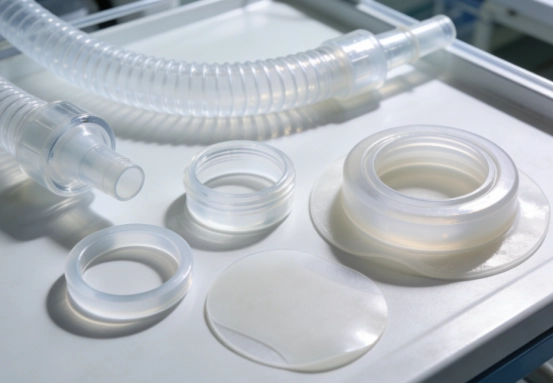
Medical‑grade silicones require very high purity with few or zero extras. All base materials face strict oversight to block dirt during handling. Makers use clean rooms that permit only verified parts.
Purity matters to stop body defenses or poison effects when items stay in the body for long stretches. So, extras like colors or stuffers seen in buyer goods get left out. This applies unless tests like USP Class VI prove them body-friendly.
Contact Time, Location, and Their Impact on Safety
Considerations for Body‑Safe Silicone Usage
The protection of body‑safe silicone hinges mostly on contact spot and duration. Brief contact—like sporting a wristband or sipping from a bottle—carries little danger. This stems from main interaction with unbroken skin.
Body-safe silicones appear often in items like foot cushions or switches thanks to their ease features: The silicone rubber foot pad has a beautiful appearance, is convenient to use, and has the functions of anti-skid, anti-collision, shockproof, temperature resistance, noise reduction. These uses prove fit for outer touch. But they may not work for inner placement.
Medical Applications and Safety of Medical‑Grade Silicone
On the other hand, medical‑grade silicones get built for straight tissue touch over long times—occasionally forever—like in implants or watch tools. These items need to hold steady in living settings without breaking down or giving off substances.
Tools like fetal heart watchers count on this steadiness. Steady skin touch happens in check periods akin to those noted before in Class II gear cases. Here, medical grade vs food grade stands out, with medical-grade better for deep, lasting contact.
Manufacturing Environment for Different Silicones
Production Processes for Body‑Safe Silicone
Making body‑safe silicone goods stresses speed while upholding clean rules fit for buyer items. Plants use auto shaping setups for even spread: Advantages of liquid feeder: liquid silicone through the feeding system can be directly into the oil press mold improve production capacity achieve high efficiency and automatic, from CASINDA.
Quality oversight involves size reviews with tools like calipers and hardness meters under ISO-approved control setups to verify evenness before sending.
Controlled Manufacturing for Medical‑Grade Silicone
Medical‑grade making calls for tougher setting controls—usually clean rooms—to block germ dirt or speck entry in handling. Each step sticks to recorded guides checked by rule reviews.
Plants handling health parts hold approvals showing match with setting control systems like ISO 14001:2015 plus quality bases like ISO 9001:2015. Certified by ISO 9001:2015 and ISO 14001:2015 confirms these operational standards crucial for sterile manufacturing lines handling medical-grade silicone formulations.
FAQ
F: Ist körpersicheres Silikon das gleiche wie medizinisches Silikon?
A: No. While both types are considered safe for human use, they differ significantly in purity levels and regulatory oversight. Body-safe silicone suits external applications with limited exposure time; medical-grade variants meet higher biocompatibility criteria suitable for internal or clinical uses under strict certification systems like those mentioned above.
F: Welche Zertifizierungen sollte medizinisches Silikon haben?
A: Medical-grade silicones should possess credentials such as ISO 10993 biocompatibility approval or USP Class VI classification verifying their suitability within healthcare environments where sterility is essential.
F: Kann Silikon in Lebensmittelqualität auf dem menschlichen Körper verwendet werden?
A: Food-grade silicone shares many safety characteristics with body-safe formulations but may not meet extended-contact requirements needed for skin adhesion or implanted use cases; therefore it should only be applied externally where direct tissue integration is unnecessary.
This detailed comparison clarifies what silicone is body safe versus what qualifies as truly medical grade—each serving distinct roles defined by their formulation integrity, manufacturing control level, testing rigor, and intended interaction with the human body’s environment.
 German
  English
  Arabic
  French
  Italian
  Japanese
  Korean
  Portuguese
  Russian
  Spanish
  Vietnamese